2025

2025 Tax Season Is Here

Tax Season Is Here and JCox Is Accepting New Clients

Tax season can be stressful, time-consuming, and expensive when you are not getting proactive guidance or clear communication. At JCox CPAs & Advisors, our goal is simple: make tax season easier, more strategic, and more cost-effective for individuals and business owners.

We are currently accepting new tax clients, and for a limited time, clients who switch to JCox can save 45% on their first year of tax filing.

Why Switch to JCox This Tax Season

Many taxpayers come to us after years of feeling rushed, confused, or surprised by their tax results. At JCox, tax preparation is not just about filing forms. It is about understanding your full financial picture and positioning you for better outcomes moving forward.

When you work with JCox, you receive:
• Clear, professional communication throughout the process
• Accurate, compliant tax preparation
• Strategic insight tailored to your situation
• A firm that understands both compliance and long-term planning

Whether you are an individual, self-employed professional, investor, or business owner, we take the time to get it right.

Save 45% When You Switch

To make switching easy, JCox is offering 30% off your first year of tax filing for new clients who transition to our firm. This offer is designed to remove the friction of changing providers while giving you immediate value.

This is ideal if you:
• Are unhappy with your current tax preparer
• Want more proactive tax planning
• Need a CPA who understands business, investments, and growth
• Prefer a firm that prioritizes accuracy and responsiveness

Now Is the Time

Tax season fills up quickly, and availability is limited. Waiting too long can mean delays, missed planning opportunities, or unnecessary stress. Switching early allows us to review your information properly and identify opportunities before filing deadlines approach.

If you are ready for a smoother tax season and meaningful savings, now is the time to make the move.

Ready to Get Started?

JCox is accepting new clients now. Switch this tax season and save 30% on your first year of filing.

Reach out today to secure your spot and take advantage of this limited-time offer.

2026 Tax Filing Season Opening Date and Preparation Tips

The Internal Revenue Service has confirmed that the 2026 federal tax filing season will officially begin on January 26, 2026, when the IRS begins accepting and processing individual income tax returns for tax year 2025. Taxpayers should prepare now to ensure an accurate and timely filing.

When the IRS Starts Accepting Returns

The IRS will start accepting 2025 individual tax returns on January 26, 2026. This is the earliest date taxpayers can submit their federal income tax returns for processing. Most taxpayers who plan to file electronically or through tax professionals will follow this launch date.

Deadline to File and Pay Taxes

Federal individual income tax returns for the 2025 tax year are due on April 15, 2026. Filing by this date helps taxpayers avoid penalties and interest. If taxpayers cannot complete their return by April 15, they can file Form 4868 with the IRS to request an automatic extension. Note that requesting an extension extends the time to file, not the time to pay any tax owed.

Documents You Should Gather Now

To file efficiently when the season opens, taxpayers should collect:

  • W-2 wage and tax statements from employers

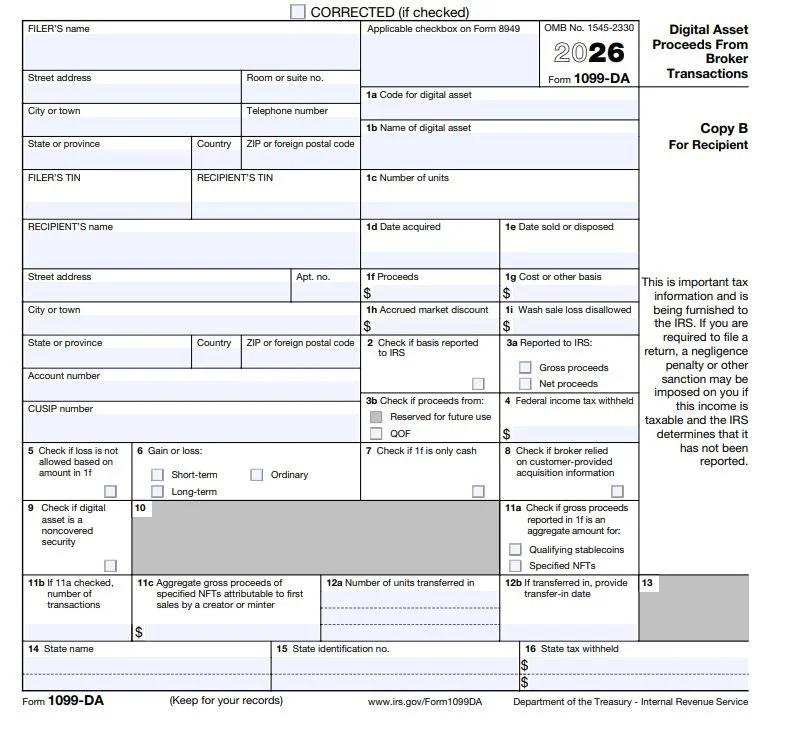
  • From the 1099 series for interest, dividends, retirement distributions, and contractor income

  • Receipts for deductible expenses such as charitable contributions and qualified education costs

  • Records of estimated tax payments made during 2025

You can also download our free Tax Organizer Checklist by Filing status here to help stay organized: Tax Organizers & Forms

Changes to Refund Delivery and Filing Options

For the 2026 filing season, the IRS will emphasize electronic filing and direct deposit for refunds as the agency phases out paper refund checks. Taxpayers should ensure their bank information is accurate when filing to receive refunds quickly and securely.

The IRS Free File program remains available to eligible taxpayers with adjusted gross incomes below certain thresholds, offering a free option to prepare and submit their federal returns electronically.

Plan for Estimated Payments

The fourth quarter estimated tax payment for the 2025 tax year is due January 15, 2026. Taxpayers who are self-employed or have other income without withholding should not overlook this deadline to avoid underpayment penalties.

New Client Incentive

New clients who switch to JCox CPAs & Advisors, P.C. receive 30% off their first year of services, plus a complimentary tax planning report at onboarding and a mid year tax planning review. This proactive approach helps identify tax savings opportunities early and adjust strategies before year-end.

2026 Retirement Plan Contribution and Benefit Limits

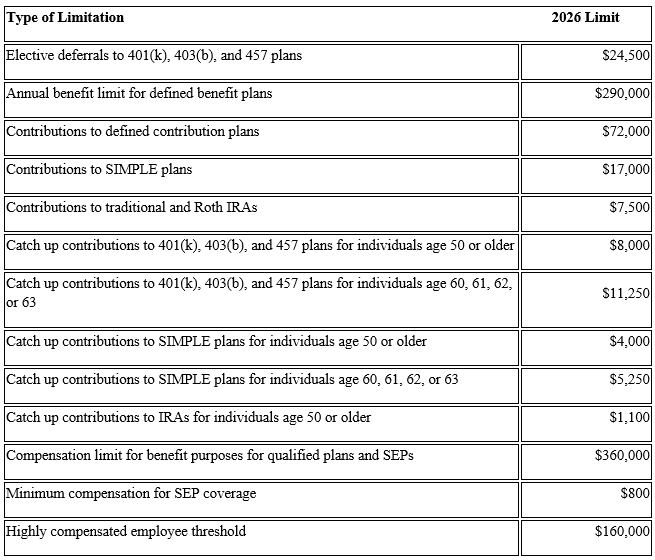
The Internal Revenue Service has released updated retirement plan contribution limits to reflect cost-of-living adjustments under the Internal Revenue Code (Notice 2025-67). These changes impact employee deferrals, catch-up contributions, employer contributions, and IRA planning and are especially important for year-end tax planning.

2026 401(k), 403(b), and 457(b) Contribution Limits

Under Internal Revenue Code Section 402(g), the maximum elective deferral limit for 2026 is $24,500. This limit applies in total across all employer-sponsored retirement plans and includes both traditional and Roth deferrals. Contributions to traditional 401(k) plans are made on a pretax basis and reduce taxable income in the year of contribution, while Roth contributions are made with after tax dollars but allow for tax free growth and distributions if requirements are met.

Catch Up Contributions for Individuals Age 50 and Older

Internal Revenue Code Section 414(v) allows individuals aged 50 or older to make additional catch-up contributions. For 2026, the standard catch-up contribution is $8,000. In addition, individuals ages 60 through 63 may qualify for an enhanced catch-up contribution of $11,250 if the retirement plan allows it.

Beginning in 2026, the SECURE 2.0 Act requires that catch-up contributions for employees with prior year wages exceeding $150,000 be designated as Roth contributions. If an employer plan does not allow Roth catch-up contributions, these individuals may not be able to make catch-up contributions at all.

Total Annual Contribution Limit

Internal Revenue Code Section 415(c) limits the total amount that can be contributed to a participant’s retirement account in a single year. For 2026, the total contribution limit is $72,000. This includes employee deferrals, employer matching contributions, profit-sharing contributions, and forfeitures. Catch-up contributions are not included in this limit.

IRA Contribution Limits

Under Internal Revenue Code Section 219, the contribution limit for traditional and Roth IRAs for 2026 is $7,500. Individuals aged 50 or older may contribute an additional $1,100 as a catch-up contribution. Eligibility to deduct traditional IRA contributions or to contribute to a Roth IRA is subject to modified adjusted gross income limits.

Income Phase Outs and Planning Considerations

Taxpayers covered by a workplace retirement plan may have their traditional IRA deduction phased out at higher income levels. Roth IRA contributions are also subject to income-based phase-outs. Taxpayers whose income exceeds Roth IRA limits may still consider a backdoor Roth IRA strategy, subject to Internal Revenue Code Section 408A.

2026 Retirement Plan Contribution and Benefit Limits Summary

Action Steps for 2026

Taxpayers should consider maximizing their retirement contributions to take advantage of tax-deferred growth and current-year tax savings.

Employers should review plan documents to ensure compliance with Roth catch-up rules and SECURE 2.0 requirements. Coordinating employer plan contributions with IRA strategies can significantly enhance long-term retirement outcomes.

Invest America Accounts "Trump Accounts": What Parents Need to Know

What Parents Need to Know About the New Child Investment Accounts

America has introduced one of the most significant financial tools for families in decades. Through the One Big Beautiful Bill Act and the launch of Invest America, every child under 18 years old with a Social Security number now has access to a long-term investment account that grows over time. The program provides either a $1,000 federal deposit for new births beginning in 2025 or a $250 deposit for children 10 and younger, funded by Michael and Susan Dell. These accounts give families a new way to build generational financial security.

This blog breaks down exactly how the program works, who qualifies, and how families can benefit from it, both practically and from a tax perspective.

What Is Invest America

Invest America is a national savings and investment initiative overseen by the United States Treasury. According to the official program fact sheet, every child under age 18 with a Social Security number is eligible for an account, and parents activate the account directly through the Treasury. The accounts are low-cost, professionally managed, and regulated for safety and transparency.

These accounts are designed to give children a long-term savings platform that can be funded by parents, relatives, employers, and, in some cases, philanthropic contributors.

These new child investment accounts are referred to in three different ways, and all three names describe the same program. The official government name is Invest America Accounts. This is the name used by the United States Treasury and in the program’s published fact sheet. Many parents and news outlets call them Trump Accounts because the program was created and funded under the One Big Beautiful Bill Act. The technical tax code name is 530A Accounts, which is the formal classification adopted by Congress, similar to how 529 plans are labeled in the tax code.

The Two Funding Paths: Federal $1,000 Deposit and Dell $250 Deposit

Children Born On or After January 1, 2025

Children born in 2025 or later automatically receive a $1,000 contribution from the United States Treasury after the parent activates their account. Families and community members may contribute up to $5,000 per year, and employers may also contribute as an employee benefit. State governments, local governments, and philanthropic groups may contribute without limit, and these contributions do not affect the family’s $5,000.

Children Born Before 2025

Twenty-five million children who are age ten or younger may receive a $250 initial deposit funded by the Dell family once the parent activates the account. Priority is given to younger children if funding demand exceeds the available funds. Children who receive the federal $1,000 newborn deposit do not qualify for this $250 contribution. If any funds remain after younger children receive deposits, eligibility may expand to older children.

How Children Can Use the Funds at Age 18

Beginning at age eighteen, a child can use a portion of the account balance for major early adulthood opportunities, such as:

(a)   Education or technical job training

(b)  Starting a small business

(c)   Purchasing a first home

Any unused funds are automatically converted into a traditional IRA, allowing the money to continue growing tax-deferred. This provides a dual benefit: early life opportunity combined with retirement security.

Tax Rules You Should Understand

Below is the tax interpretation based on the One Big Beautiful Bill Act and the Internal Revenue Code.

Child Tax Credit Increase

The Child Tax Credit under Internal Revenue Code section 24 will be $2,200 per eligible child in tax year 2025. The refundable portion will be $1,700. Adjustments for inflation begin in 2026. Although this credit is separate from Invest America, many families will direct their tax savings into these accounts.

Tax Treatment of Deposits

         i.            Federal and Dell contributions are treated as non-taxable gifts under Internal Revenue Code section 102.

       ii.            Family contributions are considered gifts to the child and follow the annual gift exclusion rules under section 2503.

    iii.            Employer contributions are not treated as wages and are deductible to the employer under section 162.

    iv.            Philanthropic contributions remain completely non-taxable to both the parent and the child.

Tax Treatment at Age 18

When the account becomes a traditional IRA, all IRA rules apply under Internal Revenue Code section 408. Certain withdrawals for education, first home purchases, or qualified training programs may avoid early withdrawal penalties.

Why This Program Matters for Families

Structured Wealth Building from Birth

Invest America gives families a federally guided, professionally managed investment opportunity that starts at birth and continues into adulthood.

A New Tool for Narrowing Wealth Gaps

The fact sheet emphasizes that these accounts help strengthen financial confidence, expand long-term opportunity, and support economic mobility.

Employer and Community Involvement

Employers can contribute as a benefit, and philanthropic groups can support large numbers of children without contribution limits.

Financial Education Opportunity

Parents can involve their children in tracking the account’s growth over time, giving them real-world exposure to saving and investing.

When Accounts Go Live

According to the most recent federal guidance, Trump Accounts are expected to open for parent activation on July 4, 2026. This is the anticipated date when the United States Treasury will begin allowing parents and guardians to establish Invest America accounts and receive the initial federal or philanthropic deposits. The Treasury has not yet released the official activation portal or enrollment link. This blog will be updated as soon as the Treasury publishes the final instructions and access page.

How Long Does the Program Last

Trump Accounts are currently authorized only for children born within a limited window of 2025 through 2028. The law does not guarantee that children born after 2028 will receive a federal seed deposit, and the continuation or expansion of the program will depend on future legislation. Existing accounts for eligible children remain valid, but future eligibility may change if new laws are enacted or administrations adjust program priorities.

Steps for Parents

  1. Activate the account through the Treasury once the platform goes live.

  2. Confirm whether your child receives the $1,000 federal deposit or the $250 Dell deposit.

  3. Consider setting up consistent contributions during the year.

  4. Involve employers or relatives who want to contribute.

  5. Begin planning now for how funds may support education, business building, or a first home at age eighteen.

Important Notice: The United States Treasury has not yet released the activation portal for Trump Accounts. Parents will be able to activate accounts once the Treasury publishes the official link, which has not gone live at this time.

REVISED DATE: 12/2/2025

Source: IA-FactSheet-Parents DEC 2025 & Notice 2025-68

Navigating BOI Compliance: Key Deadlines and Updates for Small Businesses in 2025

Corporate Transparency Act: New Beneficial Ownership Reporting Requirements for Small Businesses

The Corporate Transparency Act (CTA), enacted in 2021, introduces significant changes to ownership reporting for small businesses in the United States. Designed to combat illicit financial activities, the CTA mandates that many corporations, limited liability companies (LLCs), and similar entities disclose information about their beneficial owners to the Financial Crimes Enforcement Network (FinCEN).

Recent Legal Developments

Initially, the CTA's enforcement faced legal challenges. In December 2024, a federal judge in Texas issued an injunction, temporarily halting the law's implementation. However, on January 23, 2025, the U.S. Supreme Court lifted this injunction, allowing the CTA's provisions to take effect. Following this decision, FinCEN announced that the reporting requirements are back in effect, setting a new compliance deadline of March 21, 2025, for most companies. Additionally, businesses impacted by Hurricanes Milton, Helen, Debby, Beryl, or Francine have been granted an extended deadline of April 23, 2025, to submit their Beneficial Ownership Information (BOI) reports.

Who Needs to Report?

The CTA's reporting obligations apply to a wide range of entities, including:

  • Domestic Reporting Companies: Corporations, LLCs, and other entities created by filing a document with a secretary of state or similar office under the laws of a state or Indian tribe.

  • Foreign Reporting Companies: Entities formed under the laws of a foreign country that are registered to do business in the United States.

Certain entities are exempt from reporting, such as publicly traded companies, banks, and tax-exempt organizations. It's essential for businesses to assess their status to determine if they fall under the reporting requirements.

What Information Must Be Reported?

For each beneficial owner, reporting companies must provide:

  • Full Legal Name

  • Date of Birth

  • Residential or Business Address

  • Unique Identifying Number: From an acceptable identification document (e.g., non-expired U.S. driver's license, passport) along with an image of the document.

Additionally, companies must report information about themselves, including legal name, any trade names, business address, and jurisdiction of formation or registration. (fincen.gov)

How to Submit Reports

Reports are to be filed electronically through FinCEN's secure filing system. The system is designed to be user-friendly, and there is no fee for submitting reports. FinCEN provides a Small Entity Compliance Guide to assist businesses in understanding and fulfilling their reporting obligations.

Implications for Small Businesses

Non-compliance with the CTA can result in significant penalties, including fines and potential criminal charges. It's crucial for small business owners to:

  • Determine Applicability: Assess whether their business structure requires them to report under the CTA.

  • Gather Necessary Information: Collect the required details for all beneficial owners.

  • Meet the Deadline: Ensure that reports are submitted by the deadline of March 21, 2025, deadline. For those impacted by Hurricanes Milton, Helen, Debby, Beryl, or Francine, the extended deadline is April 23, 2025